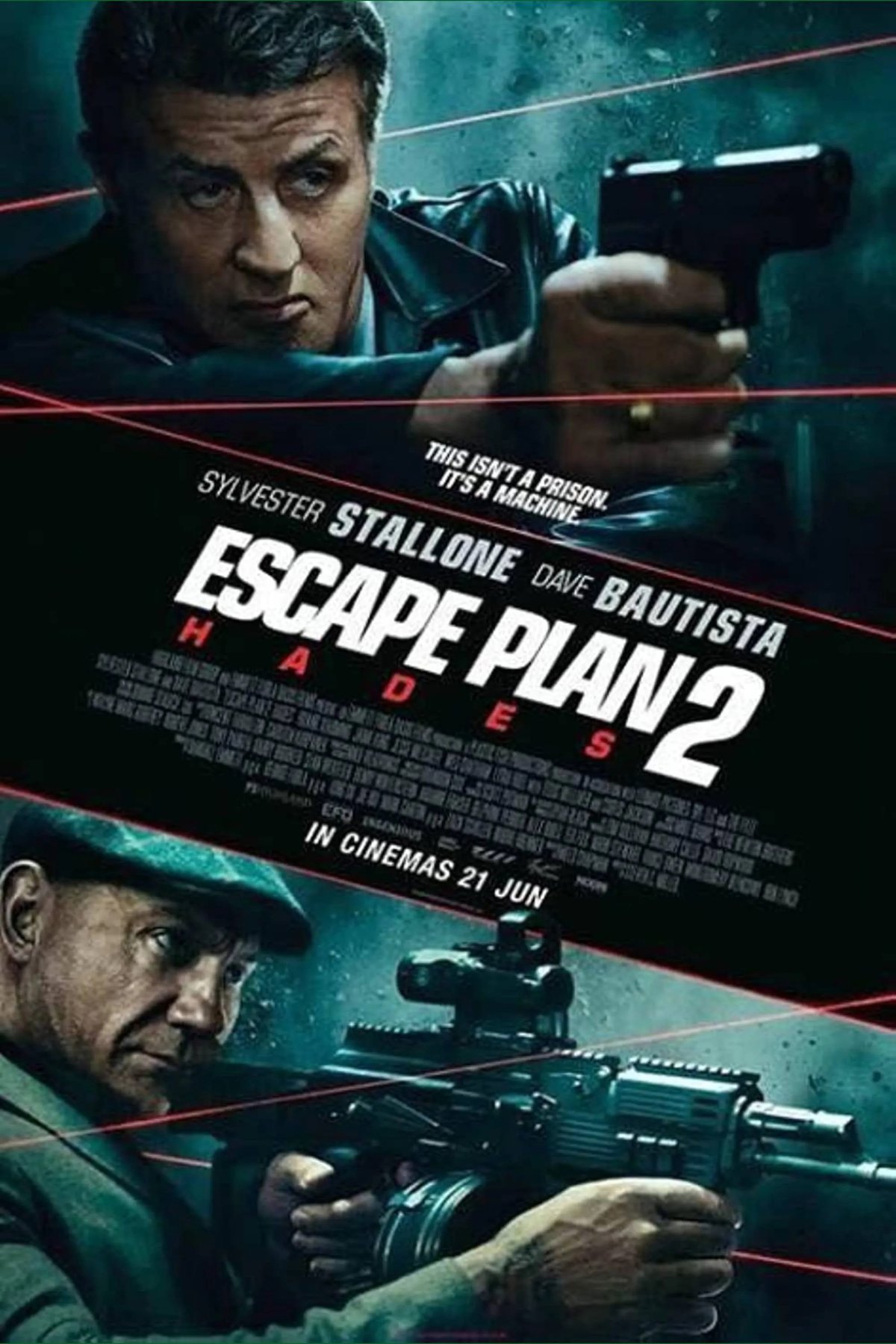
In the landscape of direct-to-video sequels, few films arrive with the baggage and diminished expectations quite like 2018's "Escape Plan 2: Hades." Following the surprising success of its predecessor, the critical reception of Escape Plan 2 actor performances became a focal point for many cinephiles, highlighting a stark contrast between a talented cast and a film struggling with its own identity. Was it a valiant effort by seasoned pros, or merely a contractual obligation for big names caught in a messy production?
At a Glance: Actor Performances in Hades
- Sylvester Stallone: Delivers a reliable, gritty performance true to Ray Breslin, often lauded as anchoring the film despite limited screen time.
- Huang Xiaoming: Faced criticism as an "unclear protagonist," with his performance overshadowed by audience expectations for more Stallone action and the film's "martial arts game" feel.
- Dave Bautista: Praised for his commanding physical presence, gravitas, and combat skills, emerging as a strong supporting force.
- Jesse Metcalfe: Showcased versatility, toughness, and convincing physicality, making the most of a challenging role.
- 50 Cent: Contributed a quiet intensity and tech-savvy charm, adding a modern touch to the ensemble.
- Wes Chatham: His performance as the antagonist was largely hampered by a confusing script that left his character's motivations unclear.
- Overall: Performances were generally seen as a mixed bag, with some actors rising above a weak script, while others struggled with underdeveloped characters and a muddled narrative.
The Shadow of Hades: Why the Film's Flaws Impacted Actor Reception
"Escape Plan 2: Hades" was never destined for critical acclaim. A China-US co-production released primarily on VOD, it arrived burdened by a plot widely described as confusing, motivations that felt opaque, and a general sense of being "boring" and a "waste of money." This overarching negative reception for the film itself—often characterized as a "martial arts game" rather than a coherent story—naturally cast a long shadow over the individual performances within it.
Imagine a group of skilled musicians asked to play a symphony composed with glaring errors and a disjointed structure. Even if individual solos are brilliant, the overall performance suffers. This was largely the predicament for the cast of Hades. Audiences, expecting a continuation of the first film's gritty prison break, were instead presented with a more convoluted narrative focusing on 'The Hades' prison, a facility so elaborate it strained credulity. Critics and viewers alike struggled to connect with the intricate plot of Hades, which invariably made it harder to appreciate the actors' contributions, no matter how earnest. When the story falters, even the most compelling acting can feel adrift.
The Veterans: Anchoring the Ship in Stormy Waters
Despite the film's numerous shortcomings, a few familiar faces managed to deliver performances that, for many, stood out as the anchors in a stormy sea. These actors leveraged their experience and screen presence to provide moments of gravitas and familiarity.
Sylvester Stallone as Ray Breslin: A Glimmer of Grit
Reprising his role as the master escape artist Ray Breslin, Sylvester Stallone was undoubtedly the marquee draw for many. Critics generally acknowledged that Stallone delivered a performance consistent with the character's established grit, resourcefulness, and resilience. He embodied the weary but determined leader, a man grappling with a deeply personal challenge when his protégé, Shu Ren, is abducted.
However, Stallone's critical reception was often framed by a significant caveat: his notably limited screen time. Many viewers expressed disappointment, having expected a more central role for the action icon, similar to his prominent position in the first "Escape Plan." Instead, his character largely operated in the background, assisting the escape from the outside rather than orchestrating it from within the notorious prison. This "unbalanced appearance ratio" led to a feeling among some critics that while Stallone was "true to character," his presence felt more like a narrative anchor for a story he wasn't fully driving. He was effective, yes, but often sidelined, leaving audiences wanting more of the iconic action they associated with him.
Dave Bautista as Trent DeRosa: Imposing Presence and Unwavering Loyalty
Joining the fray as Trent DeRosa, a physically imposing and fiercely loyal security expert, Dave Bautista garnered significant praise. His performance was widely described as commanding, showcasing his formidable physical presence, gravitas, and combat skills. Bautista has consistently proven his ability to bring depth to action roles, and Hades was no exception.
DeRosa acts as a steadfast ally to Breslin, and Bautista’s portrayal brought a much-needed sense of reliability and strength to the team. His scenes, particularly those involving direct action, were often highlighted as some of the film's more engaging moments. Bautista's ability to convey both brute force and an underlying sense of loyalty allowed his character to stand out, proving that even in a critically maligned film, a strong supporting performance can leave a lasting impression. He was a welcome addition, delivering precisely what fans expect from an actor of his caliber, even if the production challenges faced by Escape Plan 2 might have limited his overall impact.
The Next Generation: Battling for Screen Time and Impact
"Escape Plan 2" attempted to expand its ensemble, bringing in new talent to carry much of the direct action. This shift, while perhaps intended to refresh the franchise, led to mixed critical results, especially regarding the film's new central figure.
Huang Xiaoming as Shu Ren: The Unclear Protagonist's Burden
As Ray Breslin’s trusted operative, Shu Ren, Huang Xiaoming was positioned as the film's primary focus, the one kidnapped and imprisoned in 'The Hades'. His character takes center stage for much of the prison-based action, executing the intricate martial arts sequences that characterize much of the film. However, the critical reception for Huang Xiaoming's performance was largely overshadowed by the broader criticisms of the film.
Many reviews pointed to Shu Ren as an "unclear protagonist." Audiences, particularly those in Western markets, expected more of Sylvester Stallone and struggled to fully invest in Shu Ren's journey. While Huang Xiaoming delivered the required mechanical Kung Fu and physical prowess, critics often found his character lacking the emotional depth or compelling narrative arc needed to truly carry the film. The imbalance in appearance ratio between him and Stallone, coupled with the film's "martial arts game" rather than story-telling approach, meant that even a technically proficient performance from Huang Xiaoming couldn't overcome the script's deficiencies. His efforts, while visually dynamic in combat, didn't quite translate into a resonating lead performance in the eyes of many.
Jesse Metcalfe as Luke Walken: Versatility and Physicality
Jesse Metcalfe, portraying the seasoned military operative Luke Walken, demonstrated a notable versatility within the confines of the script. Critics acknowledged his ability to bring a palpable toughness, gritty resilience, and convincing physicality to the role. As part of Shu Ren's team, Walken is an integral part of the prison break efforts, and Metcalfe committed fully to the action sequences and the demanding physical aspects of the character.
His performance suggested an actor striving to elevate the material, showing a dedication to portraying a capable and morally grounded operative. While perhaps not receiving the same level of specific critical breakdown as the more established stars, Metcalfe's contribution was generally seen as solid, adding another layer of competence to Breslin's diverse team.
The Ensemble: Tech Savvy, Mysterious Villains, and Missed Opportunities
A film like "Escape Plan 2" relies heavily on its ensemble to create a believable, high-stakes environment. While some members added crucial elements, others found their performances limited by poorly constructed roles. If you're curious to Meet the Escape Plan 2 Cast in more detail, diving into their backgrounds and other projects can provide useful context for their work here.
50 Cent as Hush: The Modern Edge
Curtis "50 Cent" Jackson returned as Hush, the tech-savvy member of Breslin's security team. His performance was consistent with his established screen persona, contributing a quiet intensity, streetwise charisma, and technological expertise. As the eyes and ears of the team on the outside, Hush provided crucial data and support, adding a layer of modernity and strategic depth to the escape plan.
Critics generally found 50 Cent's presence to be a stable and reliable element. He didn't demand the spotlight, but his understated performance and character contribution were essential to the plot's progression, offering moments of calm competence amidst the chaos. His role, while not expansive, solidified his place as a dependable character actor in the action genre.
Wes Chatham as Jaspar Cimbaal: The Muddled Antagonist
The antagonist is often the cornerstone of an action film, providing the necessary tension and conflict. In "Escape Plan 2," Wes Chatham took on the role of Jaspar Cimbaal, whose motivations were notoriously unclear—whether he was managing the prison or seeking revenge on Breslin for a past firing. This inherent script weakness severely hampered Chatham's ability to deliver a truly memorable or impactful villain.
The critical reception for Chatham's performance, therefore, largely mirrored the confusion surrounding his character. Reviewers often pointed out that the motivations of its antagonist were so muddled that it was difficult to grasp his threat or connect with his actions. Despite Chatham's efforts, the character felt underdeveloped, reducing Cimbaal to a generic villain rather than a formidable adversary. This highlights a crucial lesson: even a skilled actor can only do so much with a poorly written role.
Navigating Critical Waters: Distilling the Mixed Bag
The critical reception of Escape Plan 2 actor performances coalesced around a few key themes. There was a general acknowledgment that some actors, particularly Sylvester Stallone and Dave Bautista, managed to deliver solid performances despite the film's significant flaws. Their experience and established screen personas allowed them to anchor scenes and provide moments of genuine engagement.
However, the film’s fundamental narrative issues – the confusing plot, the "unclear protagonist" in Huang Xiaoming, and the muddled antagonist – largely overshadowed these individual efforts. Critics often felt that the talent assembled was underutilized, trapped within a story that simply didn't work. The imbalance of screen time, particularly with Stallone, further compounded these issues, leaving audiences with a sense of unmet expectations.
The VOD nature and limited theatrical release of "Escape Plan 2" also meant that critical discourse was somewhat fragmented compared to major studio releases. However, the consensus was clear: while individual actors sometimes shone through, their collective efforts couldn't elevate a fundamentally flawed script and direction. The film's overall struggle, including its disappointing box office performance, reflected this difficulty in resonating with audiences and critics alike.
Beyond the Screen: What "Escape Plan 2" Taught Us About Ensemble Action Films
"Escape Plan 2: Hades" offers a cautionary tale for ensemble action films, particularly sequels. While a strong cast—even one featuring legendary action stars and rising talents—is undeniably important, it's rarely enough to salvage a film burdened by a weak script and muddled direction. The critical reception of the performances here underscores the delicate balance required: character development, coherent plotlines, and strategic screen time allocation are just as vital as the actors' individual talents.
For filmmakers, the lesson is clear: invest in the story first. For audiences, it's a reminder that even your favorite actors can't always save a sinking ship. Sometimes, understanding how Escape Plan 2 ultimately concludes offers more clarity on the film's overall ambitions than focusing solely on individual performances. Ultimately, "Escape Plan 2" remains a prime example of how a film's structural integrity directly impacts how its stars are perceived, even when those stars are doing their best to perform under challenging circumstances.